
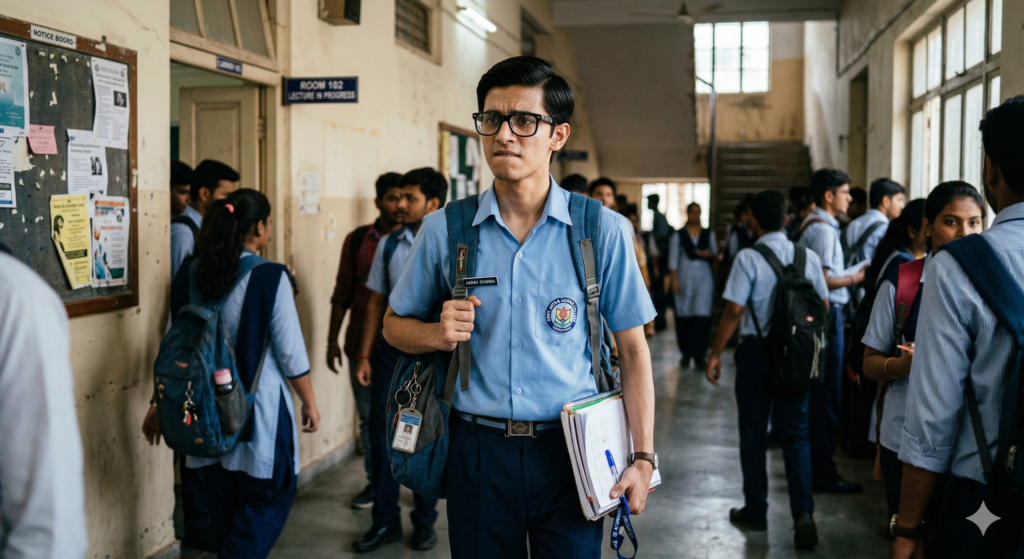
In 11th class, in Nagpur, life was simple in the way only that age allows it to be.
We were a group of students living in the same area, studying in different schools and tuitions. We had figured out our own system — exchange notes, combine the best parts, and prepare smarter for exams. It felt efficient. Almost like we had cracked something.
That’s when I got to know Abhijit.
He lived a few lanes away from my rented room. Same class, different section. The kind of student teachers trust without checking twice. Homework always complete. Assignments on time. Tests never missed.
He spoke very fast. So fast that you often had to ask him to repeat. There was a slight stammer too. Many people found it funny.
I didn’t.
But I also didn’t think much about it.
He didn’t laugh much. Didn’t roam around like the rest of us. No cricket, no timepass, no unnecessary conversations. It felt like his entire life was focused on one thing — studying.
Neat clothes. Polished shoes. Hair always in place.
Everything about him looked… controlled.
One day I borrowed his notebook because my homework was incomplete.
When I went to return it, his mother opened the door.
She was polite, well-spoken, warm in a way that makes you feel slightly uncomfortable because you’re not used to it. She insisted I sit, offered snacks, tea — the kind of hospitality that doesn’t take no for an answer.
When Abhijit came out, I handed him the notebook.
His mother asked casually, “Whose incomplete work was this?”
He immediately said it was mine.
She smiled. But there was something in her tone — light, but sharp.
He started explaining again. And again.
And in that moment, I noticed something I didn’t understand back then.
He was scared.
Not visibly. Not dramatically.
But in the way his words stumbled more than usual. In the way he kept justifying something that didn’t need justification.
So I stepped in and told her clearly — it was my work, not his.
She nodded. The moment passed.
I forgot about it.
A year later, my 12th results came.
They were lower than expected.
Not disastrous. But not enough.
My mind didn’t care about the difference.
“This is failure.”
“You’ve ruined everything.”
“You won’t get the college you wanted.”
My brother was tense. Seeing him tense made me more tense.
Then someone said it out loud:
“We didn’t expect this from you.”
That sentence stayed longer than the marks.
That entire day felt heavy. Like something had quietly shifted.
By night, my brother said, “You worked hard. Now whatever it is, accept it.”
I didn’t feel better.
But I stopped arguing with reality.
I left that rented room after 12th.
Took admission in a good engineering college. Not my first choice, but still respectable.
Life moved.
Or at least it looked like it did.
In my first year of engineering, during Diwali vacations, I went back to visit that area.
That’s when I heard about Abhijit.
He had died.
He had hanged himself.
Because he didn’t perform well in his 12th exams.
The room felt smaller after hearing that.
I don’t remember what anyone said after that. I only remember his face.
And that one moment.
Standing in front of his mother.
Trying to explain something small.
Looking… afraid.
Suddenly everything made sense.
Not in a dramatic way. In a quiet, uncomfortable way.
He wasn’t just sincere.
He was carrying something.
Something heavier than studies.
Something he couldn’t put down anywhere.
Today, whenever I hear about students ending their lives over exams, I don’t think about “pressure” as a concept.
I think about faces.
About boys who don’t know how to say, “This is too much.”
About homes where concern slowly becomes expectation… and expectation slowly becomes fear.
About how easily we confuse discipline with worth.
Nothing about that system has changed much.
We still measure children with marks.
We still reward silence as maturity.
We still expect boys to absorb pressure quietly.
And then we act surprised when something breaks.
I often think about that version of myself.
The one who also felt crushed by results.
The one who also believed that marks decide life.
The only difference?
I somehow continued.
He couldn’t.
Even today, when anxiety builds, when failure feels personal, when the future feels like it’s narrowing—
I remember him.
Not as a warning.
But as a reminder.
That pressure doesn’t always look loud.
And strength doesn’t always look visible.
Some people don’t need advice.
They just need space to breathe.
A Gentle Question for You
Have you ever felt pressure so heavy that you couldn’t explain it to anyone?
If yes… what would you have needed in that moment?
Leave a Reply