
This post explores how anxiety, work stress, and emotional exhaustion can quietly reshape intimacy in marriage. It reflects on loving someone with anxiety while slowly losing your own voice in the process. A story about walking on eggshells, unmet needs, and the loneliness that grows when fear replaces communication. For anyone navigating mental health and relationships, this is about understanding both sides without blame.
Disclaimer: I write from lived experience, not professional authority. This space is for connection and reflection, not diagnosis or treatment. If you need support, please speak to a trained mental health professional.
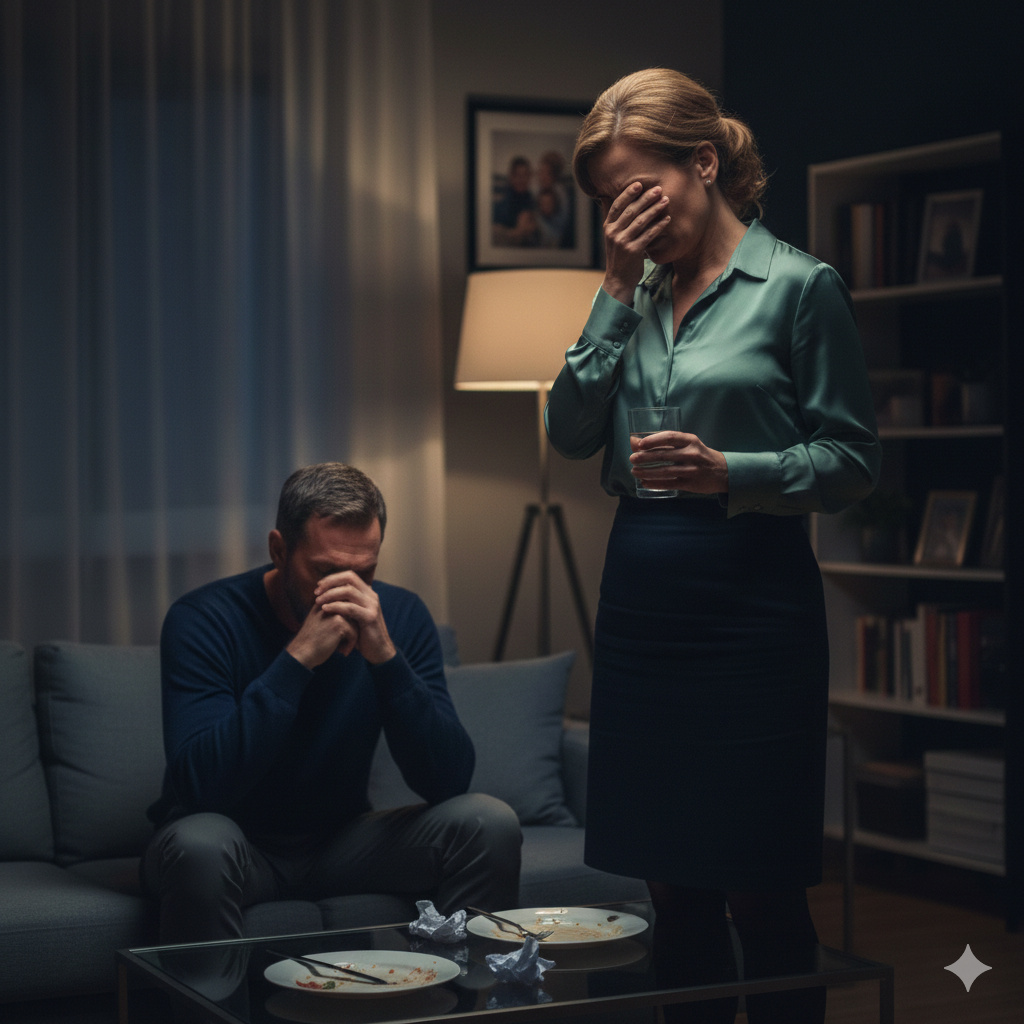
(A companion piece)
I don’t remember when I first started choosing my words carefully.
Maybe it was the day I realized that one wrong sentence could change the temperature of the entire room.
In the beginning, I thought his quietness meant depth. His seriousness felt thoughtful. I believed that if I loved him gently enough, life would eventually slow down for him.
But life didn’t slow down.
And neither did his mind.
Work stress arrived early in our marriage. Money worries followed. I watched him grow more distant—not cold, just preoccupied. Like he was always solving a problem only he could see. I learned quickly that asking too much, or asking the wrong way, could overwhelm him.
So I adjusted.
I stopped saying certain things out loud.
Not because they didn’t matter—but because I didn’t want to hurt him.
I needed reassurance.
I wanted stability.
I wanted to feel chosen—not calculated.
But instead of saying that directly, I asked safer questions.
About a car.
About plans.
About “someday.”
Each time, his face tightened. Numbers appeared. Comparisons. Long explanations. It felt like my emotions were being translated into spreadsheets—and somehow still coming out wrong.
I began to feel like I was always walking on eggshells.
Loving him meant monitoring my tone, my timing, my expectations.
Sometimes he was incredibly present. Those days were beautiful.
Riding the bike in the rain. Wandering without plans. Laughing like the world wasn’t watching us.
Those moments gave me hope.
But they were unpredictable.
And hope that appears randomly can be exhausting.
Other days, he was physically there but emotionally unreachable. I could sense his anxiety buzzing under the surface. I didn’t know how to reach him without making things worse. So I stayed quiet. And quiet slowly turned into loneliness.
When he travelled for work, I missed him intensely. That distance made my feelings clearer. When we were together, the closeness felt fragile—like one wrong move could shatter it. I didn’t know how to express love without triggering fear or guilt in him.
Intimacy changed too. Some days it felt distant. Some days it felt deeply connected. I never knew which version of him would show up—and that uncertainty made me anxious too.
I don’t think he knew how much he blamed himself.
Or how much that self-blame pushed me further away.
I wanted a partner, not a patient.
But I also didn’t want to abandon someone who was clearly struggling.
So I stayed longer than I should have.
Hoped harder than I should have.
Silenced myself more than I should have.
When he finally chose separation, it hurt—but it also made sense. We were both tired. Not angry. Just worn down by things neither of us had learned how to name.
Today, I don’t see him as someone who failed me.
I see two people who loved each other while carrying invisible weight.
And I wish—quietly—that we had learned sooner how to speak about fear without turning it into distance.
A gentle reflection question
Have you ever loved someone deeply, but felt like you were competing with their inner world for space?
Leave a Reply