
“Why We Need to Stop Calling Anxious Children ‘Shy’. In 4th standard, I didn’t know the word ‘Anxiety.’ I just knew that a box of chalk and three bullies felt like the end of the world. My parents laughed it off, but my body didn’t.
If you were a ‘sensitive’ kid who was told to ‘just man up,’ this post is for you. We weren’t cowards; we were just trying to breathe.”
Disclaimer: I write from lived experience, not professional authority. This space is for connection and reflection, not diagnosis or treatment. If you need support, please speak to a trained mental health professional.
I was in the 4th standard.
Back then, we didn’t use notebooks. We wrote on black slates, carried chalks, and learned arithmetic along with fear.
A few boys in my class decided I was useful in a very specific way. They told me to bring extra chalks for them. The first day, I ignored it. The second day, they threatened me with a heavy beating. The kind of threat that sounds ridiculous to adults but feels enormous to a child whose whole world is school.
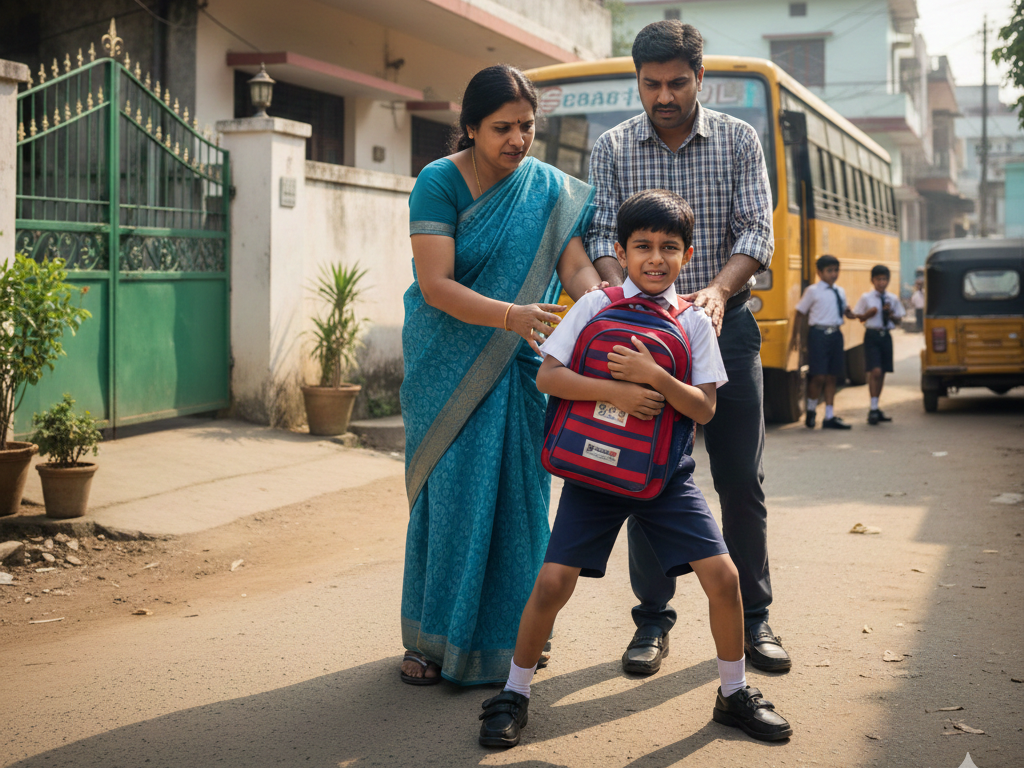
The next morning, I told my parents I didn’t want to go to school. I made up an excuse. I don’t even remember what it was—probably a stomach ache. Fear often disguises itself as illness when it doesn’t know how to speak.
The bullying didn’t stop. The threats became louder. I tried to avoid school again, but this time my parents insisted. That’s when I finally told them the real reason.
They laughed.
Not because they were cruel, but because they didn’t understand. To them, it sounded like cowardice. To me, it felt like danger. They asked me the names of the boys. I didn’t know them. Without names, teachers couldn’t help. My parents assured me they would speak to the school, but nothing really changed.
So I did what anxious children often do—I shrank.
I avoided those boys. Changed paths. Kept my head down. Tried to disappear just enough to stay safe. Every day carried the same tightness in my chest, the same calculation: Will today be the day they notice me again?
Until one day, something shifted. Quietly. Not heroically.
They demanded chalk again.
And I said no.
No shouting. No confidence speech. Just refusal.
They pushed once or twice more. I didn’t cooperate. Eventually, they lost interest. Bullies often do when there’s nothing left to extract.
And just like that, it ended.
No apology. No justice. Just silence.
At the time, I didn’t think of it as courage. I didn’t think of it as growth. I just felt tired—tired of being scared, tired of bending, tired of carrying fear like a school bag.
Looking back now, I don’t see a cowardly child. I see an anxious one. A child who didn’t yet have language for fear, boundaries, or self-protection. A child who learned—slowly, imperfectly—that avoidance can keep you safe for a while, but refusal changes the rules.
This wasn’t a victory story. It didn’t fix me.
But it taught me something I still carry: sometimes the smallest “no” is enough to reclaim a little space in the world.
And sometimes, that’s all an anxious person is trying to do—breathe without being threatened.
A gentle question to sit with:
When you think back to your childhood fears, do you see weakness—or do you see a younger version of you doing the best they could with what they had?
(You don’t have to answer it. Just notice what comes up.)
Leave a Reply